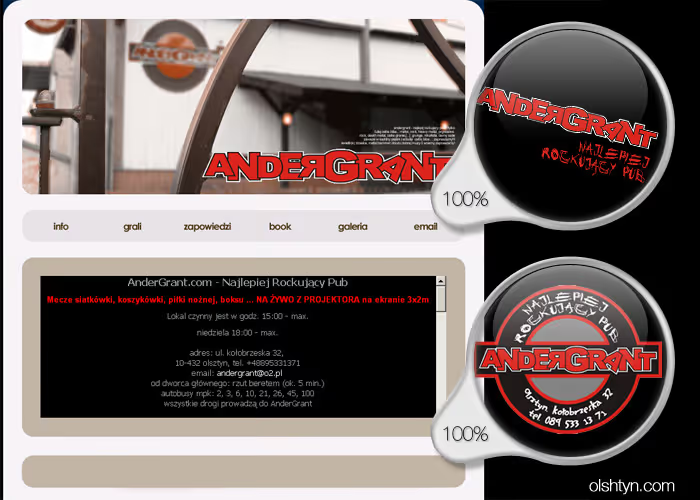
Contexto histórico del proyecto
Andergrant.com es una pieza interesante de historia web, creada en 2009 para uno de los clubes más reconocibles de Olsztyn. El proyecto muestra cómo se construían experiencias digitales atractivas antes de la popularización de frameworks modernos, responsive design maduro y herramientas actuales de despliegue.
La etapa del desarrollo web en 2009
Panorama tecnológico
El año 2009 fue un periodo de transición en desarrollo web:
- jQuery: la biblioteca se convertía en el estándar para simplificar manipulación del DOM y efectos interactivos.
- Flash: Adobe Flash seguía siendo habitual para multimedia, vídeo y elementos interactivos.
- PHP 5: PHP 5 ya estaba estabilizado y era una de las tecnologías principales del lado del servidor.
- MySQL: MySQL funcionaba como estándar práctico para bases de datos web.
- Compatibilidad de navegadores: Internet Explorer 6, 7 y 8 exigían mucho trabajo específico.
- CSS2: CSS3 empezaba a aparecer, pero todavía no tenía soporte amplio.
Estándares web para ocio y eventos
Los sitios de clubes en 2009 debían resolver varias necesidades:
- Impacto visual: diseño llamativo, orientado a captar atención rápidamente.
- Promoción de eventos: calendario dinámico y listados de fiestas.
- Galerías de fotos: presentación del ambiente del club y de eventos anteriores.
- Música: reproductores de audio y listas.
- Funciones sociales: interacción de usuarios y comunidad.
- Móvil: compatibilidad básica, limitada por los estándares de la época.
Implementación técnica (2009)
Frontend technologies
HTML 4.01 Transitional:
- Industry standard markup at the time
- Table-based layouts still common (though we used CSS)
- Semantic HTML not yet widely adopted
- XHTML compliance considerations
CSS2 Styling:
- Limited selector options compared to modern CSS
- No CSS3 features like animations, transforms, or gradients
- Browser-specific prefixes not yet standardized
- Float-based layouts (Flexbox y Grid didn’t exist)
- Importance of IE6/7 compatibility
JavaScript y jQuery:
Por qué jQuery fue un cambio importante en 2009:
- Uprościło manipulację DOM
- Ukrywało różnice między przeglądarkami
- Ułatwiało użycie AJAX
- Ofrecía una biblioteca de animaciones y efectos
- Wspierało rozwój ekosystemu pluginów
Implementación en Andergrant.com:
- Menús dinámicos con efectos hover
- Carrusel de imágenes y slideshow
- Validación y envío de formularios
- Smooth scrolling
- Ventanas modales y lightbox
- Interactividad del calendario de eventos
Arquitectura backend
PHP 5.2/5.3:
Funciones clave utilizadas:
- Programación orientada a objetos
- Extensiones MySQL mejoradas, como mysqli
- Mejor manejo de errores
- Procesamiento XML
- Gestión de sesiones
- Carga de archivos
Estructura de aplicación:
- Organización similar a MVC, antes de la adopción masiva de frameworks MVC
- Sistema de plantillas para separar lógica y presentación
- Capa de abstracción de base de datos
- Sistema de autenticación de usuarios
- Gestión de contenido
MySQL 5.0/5.1:
Diseño de base de datos:
- Tablas para gestión de eventos
- Organización de galerías fotográficas
- Registro de usuarios y perfiles
- Almacenamiento de noticias y contenido
- Configuración del sistema
Técnicas de optimización:
- Estrategias de indexación para rendimiento
- Optimización de consultas para tráfico alto
- Pooling de conexiones de base de datos
- Caché basada en archivos y primeros usos de Memcached
Integración multimedia
Tecnología Adobe Flash:
Por qué Flash era importante en 2009:
- Reproducción de vídeo antes de la adopción de HTML5 video
- Animaciones y transiciones avanzadas
- Streaming y control de audio
- Experiencias multimedia interactivas
- Comportamiento consistente entre navegadores
Implementación en Andergrant.com:
- Galería fotográfica con transiciones 3D
- Vídeos destacados de eventos
- Banners y anuncios animados
- Reproductor musical con playlist
- Mapa interactivo del club y asientos
Enfoque de desarrollo Flash:
- Programación ActionScript 3.0
- Carga externa de datos vía XML
- Integración con backend PHP
- Carga progresiva de assets grandes
- Contenido alternativo para usuarios sin Flash
Funciones y funcionalidad
Sistema de gestión de eventos
Calendario dinámico de eventos:
- Monthly y weekly calendar views
- Event detail pages with photos
- DJ y performer profiles
- Ticket pricing y reservation info
- Recurring event support
- Past event archives
Event Promotion Tools:
- Homepage featured events
- Countdown timers to major events
- Event category filtering
- Special event highlighting
- Email subscription for event notifications
- Social sharing integration (early Facebook/Twitter APIs)
Photo gallery system
Flash-Based Gallery:
- Categorized photo collections
- Event-specific albums
- High-resolution image display
- Slideshow funcionalidad
- Download options
- User rating y commenting
Gestión de contenido:
- Interfaz administrativa de carga
- Procesamiento por lotes
- Sistema de marcas de agua
- Optimización de imágenes para web
- Herramientas de organización de galerías
Funciones de interacción de usuarios
Community Elements:
- Registro de usuarios y perfiles
- Comentarios en fotografías
- Funcionalidad RSVP para eventos
- Moderación de contenido generado por usuarios
- Suscripciones a newsletter
- Gestión de listas de invitados
Integración social (primer periodo de redes sociales):
- Integración con Facebook Connect
- Visualización de feed de Twitter
- Botones para compartir
- Etiquetado de fotografías
- Invitaciones a amigos
Desafíos de desarrollo (2009)
Compatibilidad de navegadores
El desafío de Internet Explorer:
Problemas de compatibilidad IE6/7/8:
- Diferencias en el box model
- Problemas de transparencia PNG en IE6
- Inconsistencias del motor JavaScript
- Limitaciones de selectores CSS
- Necesidad de limpiar floats
Soluciones implementadas:
- Comentarios condicionales para estilos específicos de IE
- Polyfills JavaScript para funciones faltantes
- Degradación elegante
- Mejora progresiva
- Pruebas extensas entre navegadores
Optimización de rendimiento
Ancho de banda y carga:
- Velocidad media de conexión: 2-5 Mbps
- Los assets Flash requerían optimización
- La compresión de imágenes era esencial
- Lazy loading para galerías
- Estrategias de caché
Técnicas de optimización:
- Sprites CSS para iconos y elementos UI
- Minificación manual de JavaScript
- Compresión Gzip en servidor
- Optimización de consultas de base de datos
- Caché de HTML estático
Accesibilidad móvil antes de la era smartphone
Soporte móvil limitado:
- iPhone 3G todavía era relativamente nuevo
- Android empezaba a crecer, pero no dominaba el mercado
- Flash no funcionaba en iOS, una limitación importante
- Se consideró una versión móvil, pero con alcance limitado
- La experiencia principal seguía centrada en escritorio
Diseño y experiencia de usuario
Tendencias de diseño visual (2009)
Características estéticas:
- Fondos oscuros, habituales en sitios de clubs nocturnos
- Colores de acento intensos, como neón y tonos eléctricos
- Efectos brillantes y 3D
- Fondos con gradientes
- Tipografías serif para encabezados, tendencia de la época
- Animaciones intro en Flash, populares aunque discutibles
Elementos de interfaz:
- Elementos de diseño skeuomórfico
- Efectos hover en botones
- Transiciones animadas
- Navegación desplegable
- Diseños de ventanas modales
- Indicadores de carga
Arquitectura de información
Estructura del sitio:
Homepage
├── Events
│   ├── Upcoming Events
│   ├── Event Archive
│   └── Special Events
├── Gallery
│   ├── Photo Categories
│   ├── Latest Events
│   └── Videos
├── Music
│   ├── Resident DJs
│   ├── Playlists
│   └── Music Archive
├── About
│   ├── Club Info
│   ├── Location
│   └── Contact
└── Community
    ├── Guestbook
    ├── Newsletter
└── Social LinksMantenimiento y evolución
Soporte continuo (2009-2012)
Tareas regulares de mantenimiento:
- Actualizaciones de seguridad para PHP y MySQL
- Actualizaciones de contenido, eventos, fotos y noticias
- Actualizaciones de componentes Flash
- Monitorización de compatibilidad de navegadores
- Revisiónes de optimización de rendimiento
- Procedimientos de copia de seguridad
Evolución con el tiempo:
- Actualizaciones de la biblioteca jQuery
- Migraciones de versión PHP
- Optimización de base de datos
- Mejoras funcionales basadas en comentarios de usuarios
- Actualizaciones de integración con redes sociales
- Mejoras SEO
Transición tecnológica
Fin de la era Flash:
En 2012, el contexto tecnológico ya había cambiado:
- El vídeo HTML5 se convirtió en estándar
- Aumentaron las vulnerabilidades de seguridad de Flash
- El tráfico móvil creció de forma significativa
- Los frameworks JavaScript maduraron
- CSS3 ganó soporte amplio
Consideraciones de migración:
- Sustitución gradual de elementos Flash
- Implementación de vídeo HTML5
- Adopción de diseño responsivo
- Desarrollo con enfoque mobile-first
- Optimización de rendimiento
Lecciones aprendidas e importancia histórica
Lo que funcionó bien
- Adopción de jQuery: simplificó mucho el desarrollo
- Flash para multimedia: permitió experiencias ricas para la época
- Stack PHP/MySQL: fiable y eficiente
- Arquitectura modular: facilitó actualizaciones y mantenimiento
- Funciones de comunidad: reforzaron participación y fidelidad
Limitaciones de la época
- Compatibilidad de navegadores: pruebas extensas y soluciones específicas
- Limitaciones móviles: incompatibilidad de Flash con iOS
- Restricciones de rendimiento: ancho de banda y capacidad de procesamiento
- Desafíos SEO: contenido Flash no indexable por buscadores
- Seguridad: vulnerabilidades de Flash y prácticas PHP de la época
Evolución hacia estándares modernos
Cómo se construiría hoy:
- Frontend: React/Vue.js con TypeScript
- Estilos: Tailwind CSS o CSS-in-JS
- Backend: headless CMS o Next.js
- Multimedia: HTML5 video y WebGL para efectos
- Mobile: Progressive Web App
- Rendimiento: Lighthouse 95+
- Accesibilidad: WCAG 2.1 AA
Comparación histórica de tecnología
2009 vs. 2026 web development
| Aspect | 2009 (Andergrant.com) | 2026 (Modern Standards) | |