Links to websites have evolved from simple traffic sources to the cornerstone of modern SEO strategy.
In today’s digital landscape, backlinks serve as powerful endorsements that signal trust, authority, and relevance to search engines. Whether you’re a small business owner, marketing professional, or SEO specialist, understanding and implementing effective link building strategies is essential for achieving sustainable search visibility.
This comprehensive guide explores proven link building techniques that work in 2026, focusing on white-hat strategies that provide long-term value while aligning with Google’s evolving algorithms.
The Evolution of Link Building: From Quantity to Quality
Historical Perspective
Link building has undergone a dramatic transformation over the past two decades:
Early 2000s: The Wild West
- Quantity over quality reigned supreme
- Link farms and reciprocal linking schemes were common
- Directory submissions and article syndication dominated
- Search engines were easily manipulated by link volume
Mid-2010s: The Panda and Penguin Era
- Google’s algorithm updates changed the game
- Penguin (2012) penalized manipulative link building
- Panda targeted low-quality content designed for links
- Quality began outweighing quantity
2020s: The Authority and Relevance Era
- Topical authority became the focus
- E-E-A-T (Experience, Expertise, Authoritativeness, Trustworthiness) emerged
- Natural link acquisition patterns gained importance
- Content-driven link building became the standard
Why Links Matter in 2026
Despite countless algorithm updates, backlinks remain crucial because they:
- Signal Authority: Each quality backlink acts as a vote of confidence
- Drive Discovery: Search engines use links to find and crawl new content
- Build Topical Authority: Relevant links establish subject matter expertise
- Generate Referral Traffic: Links bring direct visitors from other sites
- Support E-E-A-T: Quality backlinks validate expertise and trustworthiness
Understanding Modern Link Building Fundamentals
What Makes a Quality Backlink?
Not all links are created equal. Quality backlinks share these characteristics:
Authority Metrics
- High Domain Authority (DA) or Domain Rating (DR)
- Strong organic traffic and engagement
- Established presence in the niche
- Clean backlink profile (no spam)
Relevance Factors
- Topical alignment with your content
- Industry or niche relationship
- Contextual placement within relevant content
- Audience overlap and shared interests
Technical Attributes
- Dofollow link attribute (passes SEO value)
- Editorial placement (not paid/sponsored)
- Contextual integration in content
- Natural anchor text variation
Link Placement
- Within main content body (not footer/sidebar)
- Surrounded by relevant, quality content
- From unique referring domains
- Sustainable and long-lasting
Types of Backlinks
1. Editorial Links The gold standard of link building. These occur when other websites naturally reference your content because it provides value to their audience.
Example: A marketing blog links to your comprehensive SEO guide as a resource.
2. Guest Post Links Links earned by contributing valuable content to other websites in your niche.
Example: Writing an article for an industry publication with a link to your site.
3. Resource Page Links Links from curated lists of helpful resources on specific topics.
Example: Your tool being listed on a “Best SEO Tools” resource page.
4. Broken Link Building Replacing dead links on other sites with your relevant, working content.
Example: Finding a broken link to a discontinued tool and suggesting your alternative.
5. Digital PR Links Links earned through newsworthy content, data studies, or expert commentary.
Example: Journalists citing your original research in news articles.
6. Relationship-Based Links Links from partnerships, collaborations, or industry relationships.
Example: A supplier linking to your case study from their partner page.
Strategic Link Building Framework
Phase 1: Foundation Building (Month 1-2)
Audit Current Link Profile
Before building new links, understand your starting point:
-
Analyze Existing Links:
- Use tools like Ahrefs, Moz, or SEMrush
- Identify current Domain Authority/Rating
- Catalog referring domains and anchor text distribution
- Spot toxic links that may need disavowing
-
Competitor Analysis:
- Identify top 5 competitors
- Analyze their backlink profiles
- Find link opportunities they’re using
- Identify gaps in your strategy
-
Set Baseline Metrics:
- Current organic traffic
- Keyword rankings for target terms
- Referring domain count
- Domain Authority score
Create Linkable Assets
Develop content specifically designed to attract links:
Asset Types That Earn Links:
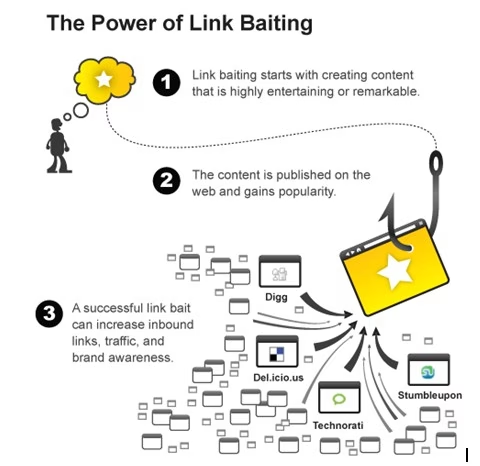
- Original Research: Data studies, surveys, industry benchmarks
- Comprehensive Guides: Ultimate how-to resources (like this one)
- Free Tools: Calculators, checkers, generators
- Visual Content: Infographics, charts, maps
- Industry Reports: Annual trends, state of industry
- Expert Roundups: Insights from industry leaders
Example: Research Study Instead of writing “SEO Tips for 2026,” create: “We Analyzed 1,000 Top-Ranking Pages: Here’s What Actually Drives Rankings”
This original research becomes linkable because:
- Provides unique data no one else has
- Supports claims in other content
- Newsworthy and shareable
- Establishes thought leadership
Phase 2: Content-Driven Link Acquisition (Month 3-6)
The Skyscraper Technique 2.0
Brian Dean’s original Skyscraper Technique evolved:
-
Find Proven Content:
- Search your target keyword
- Identify content with many backlinks
- Analyze what makes it successful
-
Create Something Better:
- Make it more comprehensive
- Update outdated information
- Improve design and usability
- Add original research or data
- Include multimedia elements
-
Strategic Promotion:
- Contact sites linking to original
- Pitch to journalists covering the topic
- Share in relevant communities
- Use paid promotion to initial boost
Guest Posting at Scale
Modern guest posting focuses on value, not just links:
Finding Opportunities:
- Search: “write for us” + your niche
- Analyze competitor guest posts
- Use tools like Pitchbox or BuzzStream
- Build relationships before pitching
Pitching Successfully:
- Research the site thoroughly
- Personalize every pitch
- Propose specific topics
- Include writing samples
- Emphasize value to their audience
Writing Link-Worthy Content:
- Match their content style and depth
- Include original insights
- Reference your own resources naturally
- Provide actionable takeaways
- Create comprehensive, valuable content
Resource Page Link Building
-
Find Resource Pages:
- Search: “keyword + resources”
- “keyword + useful links”
- “keyword + helpful resources”
-
Evaluate Opportunities:
- Check page authority
- Verify links are dofollow
- Ensure relevance to your content
-
Outreach Template:
Subject: Suggestion for your [Topic] resources page

Hi [Name],

I came across your excellent resources page on [Topic] and
noticed it's a valuable collection for [audience].

I recently published [your resource] which [specific value
proposition]. It might be a helpful addition to your list.

Here's the link: [URL]

Either way, thanks for maintaining such a comprehensive
resource for the community.

Best,
[Your name]
Phase 3: Digital PR and Authority Building (Month 6-12)
Data-Driven Content Campaigns
Create newsworthy content that journalists want to cover:
Campaign Types:
- Industry Benchmark Reports: “Average salaries in [Industry] 2026”
- Trend Analysis: “The State of [Topic]: Key Statistics”
- Comparative Studies: “[Tool A] vs [Tool B]: Performance Analysis”
- Surveys: “What 500 [Professionals] Think About [Topic]”
Distribution Strategy:
- Create press releases for major findings
- Build media lists of relevant journalists
- Pitch exclusive angles to major publications
- Use HARO (Help A Reporter Out) for expert quotes
- Promote through social media and email
HARO (Help A Reporter Out) Strategy
HARO connects journalists with expert sources:
-
Sign Up:
- Register as a source at helpareporter.com
- Select relevant categories
- Set up email alerts
-
Respond Effectively:
- Answer quickly (within hours)
- Be concise and quotable
- Provide credentials upfront
- Include bio with link potential
-
Success Tips:
- Focus on queries matching your expertise
- Offer unique insights, not generic advice
- Build relationships with journalists
- Track successful placements
Podcast and Interview Opportunities
Podcasts generate links in show notes:
-
Find Relevant Podcasts:
- Apple Podcasts, Spotify search
- Match audience with your target market
- Check if they include show note links
-
Pitch as Guest:
- Highlight expertise and unique angles
- Suggest specific topics
- Include media kit or previous appearances
-
Maximize the Opportunity:
- Prepare quotable insights
- Mention resources naturally
- Promote episode when published
- Repurpose content from interview
Advanced Link Building Tactics
Broken Link Building at Scale
The Process:
- Find relevant pages with broken links
- Create or identify replacement content
- Contact site owners with helpful suggestions
Tools for Finding Broken Links:
- Ahrefs Site Explorer → Broken backlinks
- Check My Links (Chrome extension)
- Screaming Frog SEO Spider
Outreach Approach:
Hi [Name],

I was reading your excellent article on [Topic] and noticed
the link to [Broken Resource] is no longer working.

I actually published [Your Resource] which covers similar
ground and is up-to-date. Thought it might make a useful
replacement for your readers.

Here's the link if you're interested: [URL]

No pressure either way - just wanted to help keep your
resource current.

Best,
[Your name]
Link Reclamation
Reclaim links you should already have:
Unlinked Brand Mentions:
- Monitor brand mentions (Google Alerts, Mention.com)
- Find mentions without links
- Contact authors requesting link addition
Lost Link Recovery:
- Track existing backlinks
- Identify when links are removed
- Contact site owners to understand why
- Address issues and request reinstatement
Image Link Reclamation:
- Use reverse image search (Google Images)
- Find sites using your images
- Request attribution links
Strategic Partnerships
Build relationships that generate ongoing links:
Industry Partnerships:
- Partner with complementary businesses
- Co-create content and resources
- Cross-promote each other’s tools
- Speak at each other’s events
Supplier/Client Links:
- Ask suppliers for partner page listings
- Offer testimonials in exchange for links
- Create case studies featuring partners
- Participate in partner programs
Local Business Relationships:
- Join local business associations
- Sponsor community events
- Collaborate on local initiatives
- Get listed in local directories
Internal Link Optimization
While external links get attention, internal links are crucial:
Internal Link Strategy:
-
Hub and Spoke Model:
- Create comprehensive pillar pages
- Link related content to pillars
- Pass authority throughout site
-
Contextual Linking:
- Link naturally within content
- Use descriptive anchor text
- Connect related topics
-
Technical Implementation:
- Breadcrumb navigation
- Related posts sections
- Table of contents with jump links
- Footer link optimization
Tools for Internal Linking:
- Link Whisper (WordPress plugin)
- Ahrefs Site Audit
- Screaming Frog
Link Building Metrics and Measurement
Key Performance Indicators (KPIs)
Link-Based Metrics:
- Total referring domains
- New referring domains (monthly)
- Domain Authority/Rating growth
- Backlink profile diversity
- Anchor text distribution
Traffic Metrics:
- Organic traffic growth
- Referral traffic from links
- Keyword ranking improvements
- Click-through rates from SERPs
Business Metrics:
- Leads generated from organic traffic
- Conversions from organic visitors
- ROI of link building campaigns
- Customer acquisition cost via SEO
Tools for Link Building Analysis
Comprehensive SEO Platforms:
- Ahrefs: Best for backlink analysis and competitor research
- SEMrush: Strong for keyword and content analysis
- Moz: Good for Domain Authority tracking
- Majestic: Specialized in link analysis
Outreach and Relationship Management:
- BuzzStream: Link building and digital PR
- Pitchbox: Scalable outreach campaigns
- Hunter.io: Email finding and verification
- NinjaOutreach: Influencer and blogger outreach
Monitoring and Alerts:
- Google Search Console: Free backlink data
- Google Alerts: Brand mention monitoring
- Mention.com: Comprehensive mention tracking
- Ahrefs Alerts: New backlink notifications
Avoiding Penalties: Link Building Safety
Google’s Link Guidelines
Violations to Avoid:
- Buying or selling links (including sponsored content without proper tags)
- Excessive link exchanges
- Automated link building
- Low-quality directory submissions
- Widget links
- Hidden or sneaky links
- Links from penalized sites
Nofollow and Sponsored Tags:
Use rel="nofollow" for:
- User-generated content links
- Paid or sponsored links
- Untrusted content
Use rel="sponsored" for:
- Advertisements
- Paid placements
- Affiliate links
Use rel="ugc" for:
- Forum post links
- Comment links
- User profile links
Red Flags in Your Link Profile
Danger Signs:
- Sudden spike in backlinks
- Large percentage from same domain
- Exact-match anchor text over-optimization
- Links from irrelevant or foreign sites
- Links from known link farms
- Paid links without proper tags
Regular Link Audits:
- Quarterly backlink profile reviews
- Identify and disavow toxic links
- Monitor for negative SEO attacks
- Track anchor text distribution
Recovery from Link Penalties
If You Receive a Manual Action:
- Review Google Search Console message
- Identify problematic links
- Attempt to remove bad links
- Document removal attempts
- Submit disavow file for remaining links
- Submit reconsideration request
Algorithmic Penalty Recovery:
- Identify when traffic dropped
- Analyze backlink changes around that time
- Remove/disavow low-quality links
- Focus on earning quality links
- Wait for algorithm refresh
Link Building for Specific Industries
E-Commerce Link Building
Strategies That Work:
- Product review outreach to bloggers
- Gift guide placements
- How-to content featuring products
- Industry report sponsorships
- Influencer collaborations
Avoid:
- Paid product reviews without disclosure
- Affiliate link over-optimization
- Low-quality coupon site links
- Irrelevant product directories
Local Business Link Building
High-Value Opportunities:
- Local business associations
- Chamber of Commerce directories
- Local news and media coverage
- Community event sponsorships
- Local partnership pages
Citation Building:
- Google Business Profile optimization
- Consistent NAP (Name, Address, Phone) across directories
- Industry-specific directories
- Review site profiles
B2B Link Building
Effective Tactics:
- Whitepaper and research distribution
- Industry publication guest posts
- Webinar collaborations
- Case study placements
- Speaking at industry events
Relationship Focus:
- Long-term partnership building
- Value-first outreach
- Professional networking
- Industry association involvement
Future of Link Building: Preparing for 2027 and Beyond
Emerging Trends
AI-Generated Content Impact:
- Unique, human-created content becomes more valuable
- First-hand experience and expertise differentiates
- AI-assisted research but human analysis
Voice Search and Smart Devices:
- Featured snippets gain importance
- Structured data for voice answers
- Conversational content optimization
Author Authority:
- Google’s emphasis on individual expertise
- Author bio links and profiles
- Thought leadership positioning
Semantic Search Evolution:
- Topical clusters over individual keywords
- Entity-based link value
- Context and intent matching
Building Sustainable Link Assets
Characteristics of Future-Proof Content:
- Evergreen topics with regular updates
- Original research and data
- Comprehensive resource depth
- Multi-format presentation
- Community engagement features
Ongoing Maintenance:
- Regular content updates
- Broken link monitoring
- Performance optimization
- User experience improvements
Action Plan: Your First 90 Days
Week 1-2: Foundation
- Audit current backlink profile
- Analyze competitor links
- Set up monitoring tools
- Create link building strategy document
Week 3-4: Asset Creation
- Identify linkable content opportunities
- Create 2-3 comprehensive guides
- Develop free tool or resource
- Update existing high-potential content
Week 5-8: Initial Outreach
- Pitch 20 guest post opportunities
- Submit to 15 resource pages
- Respond to 30 HARO queries
- Reach out for broken link building
Week 9-12: Scale and Optimize
- Launch first data-driven campaign
- Build 3 strategic partnerships
- Implement internal linking improvements
- Analyze results and refine approach
Summary: Key Takeaways
The Golden Rules of Link Building:
- Quality Over Quantity: 10 great links beat 100 mediocre ones
- Relevance is Critical: Niche-relevant links carry more weight
- Content Comes First: Great content earns links naturally
- Relationships Matter: Build genuine connections, not transactions
- Patience Pays Off: Link building is a marathon, not a sprint
- Diversify Tactics: Use multiple strategies for natural profile
- Monitor and Maintain: Regular audits prevent penalties
- Focus on Value: Always prioritize user value over SEO
Immediate Action Items:
- Audit your current backlink profile
- Create 2-3 linkable assets
- Set up Google Alerts for brand mentions
- Identify and reach out to 10 resource page opportunities
- Sign up for HARO and respond to relevant queries
- Optimize internal linking structure
- Set realistic 90-day link building goals
Remember: The best link building strategy combines exceptional content creation, genuine relationship building, and consistent effort over time. Focus on becoming a valuable resource in your industry, and links will follow naturally.
Related Resources
Expand your SEO knowledge with these comprehensive guides:
- Semantic SEO Guide for WordPress 2026 - Master modern on-page optimization
- Technical SEO Audit Checklist - Ensure your site is technically sound
- Content Marketing Strategy Guide - Create content that earns links naturally
- Local SEO Mastery Guide - Dominate local search results
Last updated: January 31, 2026
Need help with your link building strategy? Contact WPPoland for professional SEO services.