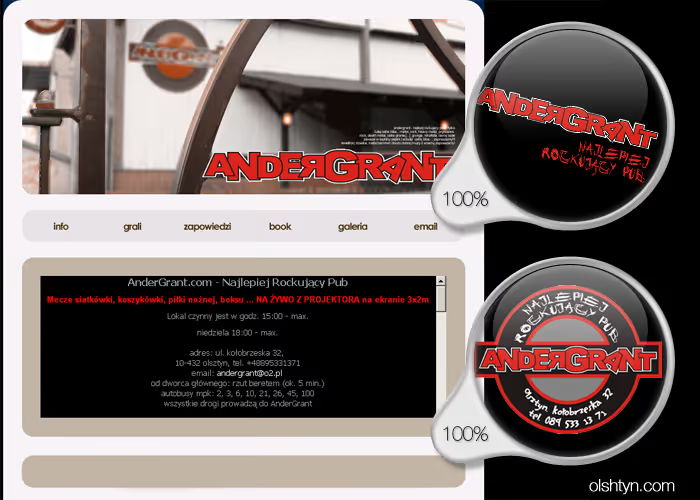
Project Historical Context
Andergrant.com represents a significant piece of web development history, created in 2009 for what was then the largest and most prestigious nightclub in Olsztyn, Poland. This project showcases the evolution of web technologies and serves as an excellent case study in how cutting-edge technologies of their time were leveraged to create compelling digital experiences.
The Era of Web Development (2009)
Technology Landscape
The year 2009 marked a transitional period in web development:
- jQuery Revolution: jQuery was becoming the dominant JavaScript library, simplifying DOM manipulation
- Flash Dominance: Adobe Flash was still widely used for multimedia, video, and interactive content
- PHP 5 Maturity: PHP 5 had stabilized and was the leading server-side language
- MySQL Standard: MySQL was the de facto standard for web databases
- Browser Wars: Internet Explorer 6, 7, and 8 required significant compatibility work
- CSS2 Implementation: CSS3 was emerging but not yet widely supported
Entertainment Industry Web Standards
Nightclub websites in 2009 needed to deliver:
- Visual Impact: Flashy, attention-grabbing designs
- Event Promotion: Dynamic event calendars and listings
- Photo Galleries: Showcasing club atmosphere and events
- Music Integration: Audio players and playlist features
- Social Features: User interaction and community building
- Mobile Consideration: Early mobile compatibility (though limited)
Technical Implementation (2009)
Frontend Technologies
HTML 4.01 Transitional:
- Industry standard markup at the time
- Table-based layouts still common (though we used CSS)
- Semantic HTML not yet widely adopted
- XHTML compliance considerations
CSS2 Styling:
- Limited selector options compared to modern CSS
- No CSS3 features like animations, transforms, or gradients
- Browser-specific prefixes not yet standardized
- Float-based layouts (Flexbox and Grid didn’t exist)
- Importance of IE6/7 compatibility
JavaScript and jQuery:
Why jQuery Was Revolutionary in 2009:
- Simplified DOM manipulation
- Cross-browser compatibility abstraction
- AJAX made easy
- Animation and effects library
- Plugin ecosystem emergence
Implementation on Andergrant.com:
- Dynamic navigation menus with hover effects
- Image carousel and slideshow functionality
- Form validation and submission handling
- Smooth scrolling implementations
- Modal windows and lightboxes
- Event calendar interactivity
Backend Architecture
PHP 5.2/5.3:
Key Features Utilized:
- Object-oriented programming (PHP 5 major improvement)
- Improved MySQL extensions (mysqli)
- Better error handling
- XML processing capabilities
- Session management
- File upload handling
Application Structure:
- MVC-like organization (before true MVC frameworks were standard)
- Template system for separating logic from presentation
- Database abstraction layer
- User authentication system
- Content management capabilities
MySQL 5.0/5.1:
Database Design:
- Event management tables
- Photo gallery organization
- User registration and profiles
- News and content storage
- Configuration and settings
Optimization Techniques:
- Indexing strategies for performance
- Query optimization for high traffic
- Database connection pooling
- Caching strategies (file-based, memcached emerging)
Multimedia Integration
Adobe Flash Technology:
Why Flash Was Essential in 2009:
- Video playback (HTML5 video didn’t exist)
- Advanced animations and transitions
- Audio streaming and control
- Interactive multimedia experiences
- Consistent cross-browser behavior
Implementation on Andergrant.com:
- Photo gallery with 3D transitions
- Event highlight videos
- Animated banners and advertisements
- Music player with playlist functionality
- Interactive club map and seating
Flash Development Approach:
- ActionScript 3.0 programming
- External data loading via XML
- Integration with PHP backend
- Progressive loading for large assets
- Fallback content for non-Flash users
Features and Functionality
Event Management System
Dynamic Event Calendar:
- Monthly and weekly calendar views
- Event detail pages with photos
- DJ and performer profiles
- Ticket pricing and reservation info
- Recurring event support
- Past event archives
Event Promotion Tools:
- Homepage featured events
- Countdown timers to major events
- Event category filtering
- Special event highlighting
- Email subscription for event notifications
- Social sharing integration (early Facebook/Twitter APIs)
Photo Gallery System
Flash-Based Gallery:
- Categorized photo collections
- Event-specific albums
- High-resolution image display
- Slideshow functionality
- Download options
- User rating and commenting
Content Management:
- Admin upload interface
- Batch processing capabilities
- Watermarking system
- Image optimization for web
- Gallery organization tools
User Interaction Features
Community Elements:
- User registration and profiles
- Photo commenting system
- Event RSVP functionality
- User-generated content moderation
- Newsletter subscriptions
- Guest list management
Social Integration (Early Social Media Era):
- Facebook Connect integration
- Twitter feed display
- Social sharing buttons
- Photo tagging capabilities
- Friend invitation system
Development Challenges (2009)
Browser Compatibility
The Internet Explorer Challenge:
IE6/7/8 Compatibility Issues:
- Box model differences required hacks
- PNG transparency problems in IE6
- JavaScript engine inconsistencies
- CSS selector limitations
- Float clearing requirements
Solutions Implemented:
- Conditional comments for IE-specific styles
- JavaScript polyfills for missing features
- Graceful degradation strategies
- Progressive enhancement approaches
- Extensive cross-browser testing
Performance Optimization
Bandwidth and Loading Considerations:
- Average connection speeds: 2-5 Mbps
- Flash assets required optimization
- Image compression essential
- Lazy loading for galleries
- Caching strategies implementation
Optimization Techniques:
- CSS sprites for icons and UI elements
- JavaScript minification (manual)
- Gzip compression on server
- Database query optimization
- Static HTML caching
Mobile Accessibility (Pre-Smartphone Era)
Limited Mobile Support:
- iPhone 3G was relatively new
- Android emerging but not dominant
- Flash not supported on iOS (major limitation)
- Mobile-specific version considered but limited
- Focus remained on desktop experience
Design and User Experience
Visual Design Trends (2009)
Aesthetic Characteristics:
- Dark backgrounds (standard for nightclub sites)
- Vibrant accent colors (neon, electric)
- Glossy and 3D effects
- Gradient backgrounds
- Serif fonts for headings (trend at the time)
- Flash intro animations (popular but controversial)
User Interface Elements:
- Skeuomorphic design elements
- Button hover effects
- Animated transitions
- Dropdown navigation
- Modal window designs
- Loading indicators
Information Architecture
Site Structure:
Homepage
├── Events
│   ├── Upcoming Events
│   ├── Event Archive
│   └── Special Events
├── Gallery
│   ├── Photo Categories
│   ├── Latest Events
│   └── Videos
├── Music
│   ├── Resident DJs
│   ├── Playlists
│   └── Music Archive
├── About
│   ├── Club Info
│   ├── Location
│   └── Contact
└── Community
    ├── Guestbook
    ├── Newsletter
    └── Social Links
Maintenance and Evolution
Ongoing Support (2009-2012)
Regular Maintenance Tasks:
- Security updates for PHP and MySQL
- Content updates (events, photos, news)
- Flash component updates
- Browser compatibility monitoring
- Performance optimization reviews
- Backup procedures
Evolution Over Time:
- jQuery library updates
- PHP version migrations
- Database optimization
- Feature additions based on user feedback
- Social media integration updates
- SEO improvements
Technology Transition
End of Flash Era:
By 2012, the technology landscape had shifted:
- HTML5 video became standard
- Flash security vulnerabilities increased
- Mobile traffic grew significantly
- JavaScript frameworks matured
- CSS3 gained widespread support
Migration Considerations:
- Gradual replacement of Flash elements
- HTML5 video implementation
- Responsive design adoption
- Mobile-first approach development
- Performance optimization
Lessons Learned and Historical Significance
What Worked Well
- jQuery Adoption: Simplified development significantly
- Flash for Multimedia: Delivered rich experiences of the era
- PHP/MySQL Stack: Reliable and performant
- Modular Architecture: Enabled easy updates and maintenance
- Community Features: Built engagement and loyalty
Limitations of the Era
- Browser Compatibility: Required extensive testing and workarounds
- Mobile Limitations: Flash incompatibility with iOS
- Performance Constraints: Bandwidth and processing limitations
- SEO Challenges: Flash content not indexable by search engines
- Security Concerns: Flash vulnerabilities and PHP security practices
Evolution to Modern Standards
How the Site Would Be Built Today:
- Frontend: React/Vue.js with TypeScript
- Styling: Tailwind CSS or CSS-in-JS
- Backend: Headless CMS or Next.js
- Multimedia: HTML5 video, WebGL for effects
- Mobile: Progressive Web App (PWA)
- Performance: Lighthouse 95+ scores
- Accessibility: WCAG 2.1 AA compliance
Historical Technology Comparison
2009 vs. 2026 Web Development
| Aspect | 2009 (Andergrant.com) | 2026 (Modern Standards) | |