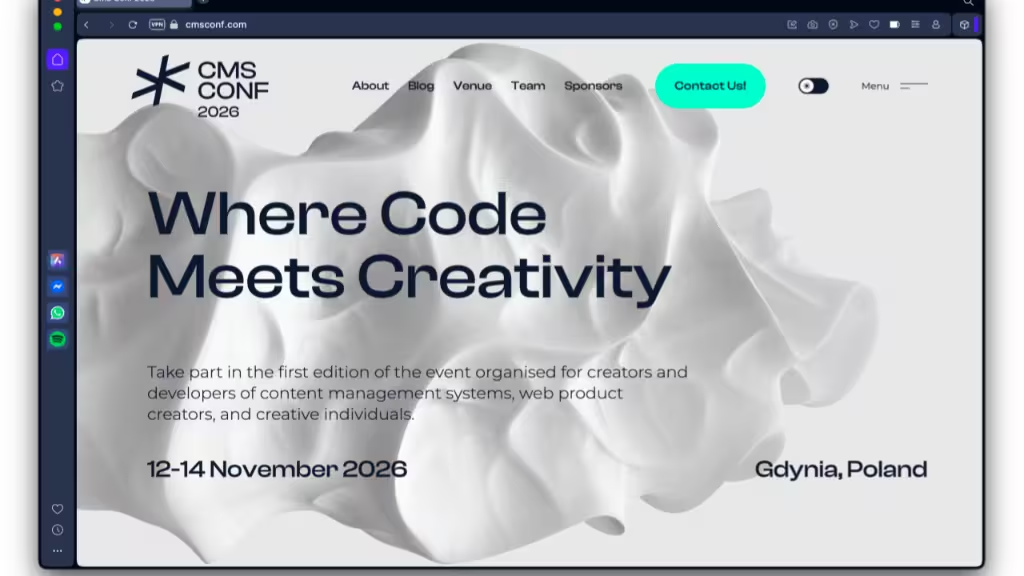
When we started planning the digital presence for CMS Conf 2026, we knew the standard “WordPress theme + plugins” route wasn’t going to cut it. We wanted something different. We needed a site that wasn’t just a brochure, but a high-performance content platform: fast, maintainable, and explicitly designed for the AI era.
Here is the story of how our website team—Agnieszka Palmowska, Maciek Palmowski, and myself—built the foundation for CMS Conf 2026 using a modern stack that represents the sweet spot for web development right now.
1. Speed by Default: Astro 5 & Tailwind CSS 4
We chose Astro 5 for one simple reason: performance is a feature.
By default, Astro ships zero JavaScript to the client. This means our pages load instantly, which is critical for mobile users checking the schedule or speakers on patchy conference Wi-Fi. We paired this with Tailwind CSS 4 (using the new Vite plugin), which has been a revelation.
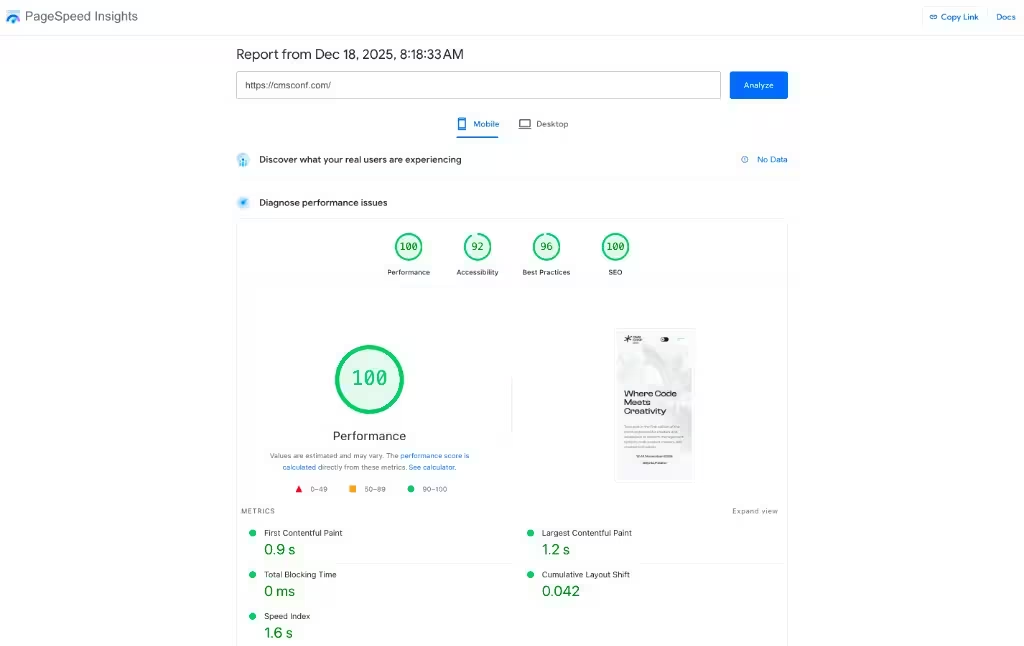
We measured the implementation using several tools, including Google PageSpeed Insights, and achieved a perfect 100 score for performance.
Technical Tip: If you’re moving to Tailwind 4, use the
@tailwindcss/viteplugin. It compiles your CSS in milliseconds, making the developer experience incredibly snappy. We also implemented LightningCSS (Rust-based) for minification and built a custom Vite plugin to preload critical CSS, eliminating that jarring “flash of unstyled content” (FOUC).
2. Empowering the Team: Pages CMS
A common bottleneck in static site projects is content management. Developers love Markdown; marketing teams… not so much.
Maciej solved this by integrating Pages CMS (pagescms.org). It’s a brilliant headless CMS that works directly with your GitHub repository. It gives our content team a friendly UI for managing blog posts and author profiles, but under the hood, it’s just committing changes to our repo.
Why this works:
- Zero Infrastructure: No database to maintain, no servers to patch.
- Git-Native: Every content change triggers our CI/CD pipeline, ensuring nothing breaks.
- Cost Efficiency: It’s free for public repositories.
3. The “Invisible” Work: Advanced SEO & Schema
Ranking in 2026 requires more than just keywords. You need structure.
We went deep on Schema.org implementation. We built a custom SchemaOrg.astro component that dynamically generates JSON-LD structured data for every page.
What we implemented:
- Organization Schema: Identifying Openweb S.C. as the legal entity.
- Event Schema: Providing Google with precise dates, location (PPNT Gdynia), and ticket information.
- @id Linking: Crucially, we use
@idreferences to “connect the dots” between the organisation and the event in Google’s Knowledge Graph.
Pro Tip: Don’t rely on default SEO plugins to do everything. Customising your Schema to link your entities (e.g., linking your Event to your Organization via IDs) is a powerful signal to search engines about who you are and what you’re doing.
4. Optimising for the AI Era (LLM)
This is my favourite part. Search is changing. People are asking ChatGPT and Perplexity about events as often as they use Google. To ensure these AI systems give accurate answers about CMS Conf, we optimised the site for them.
We implemented an llm.txt file at the root of our site. Think of it as robots.txt, but for LLMs. It provides a structured, context-rich summary of the entire conference, speakers, dates, and tech stack—explicitly formatted for AI ingestion.
We even wrote a custom Node.js script that runs at build time to scan our metadata and keep this file perfectly up-to-date. The result? When an AI crawls our site, it doesn’t have to guess. We tell it exactly what CMS Conf is.
5. Automated Quality Control
Finally, we automated the boring stuff. We set up pre-build checks with astro-link-validator to ensure we never ship a broken link. We also validated our redirects in astro.config.mjs to handle legacy URLs gracefully.
The Takeaway
Building the CMS Conf website wasn’t just about code; it was about creating a system that serves our users (speed), our team (manageability), and the machines that help people find us (SEO & AI).
If you’re building a content-heavy site in 2026, I highly recommend looking at this Astro + Tailwind + Git-based CMS architecture. It’s lean, it’s fast, and it scales beautifully.
See it live: cmsconf.com
We’re just getting started. See you in Gdynia this November!
Recommended reading
- Typographic scales for headings: Building typographic scales in CSS with :heading(), sibling-index(), and pow()
- Modern SVG loaders: Loading Smarter: SVG vs. Raster Loaders in Modern Web Design
- PWA capability overview: PWAscore – PWA Browser Scorecards