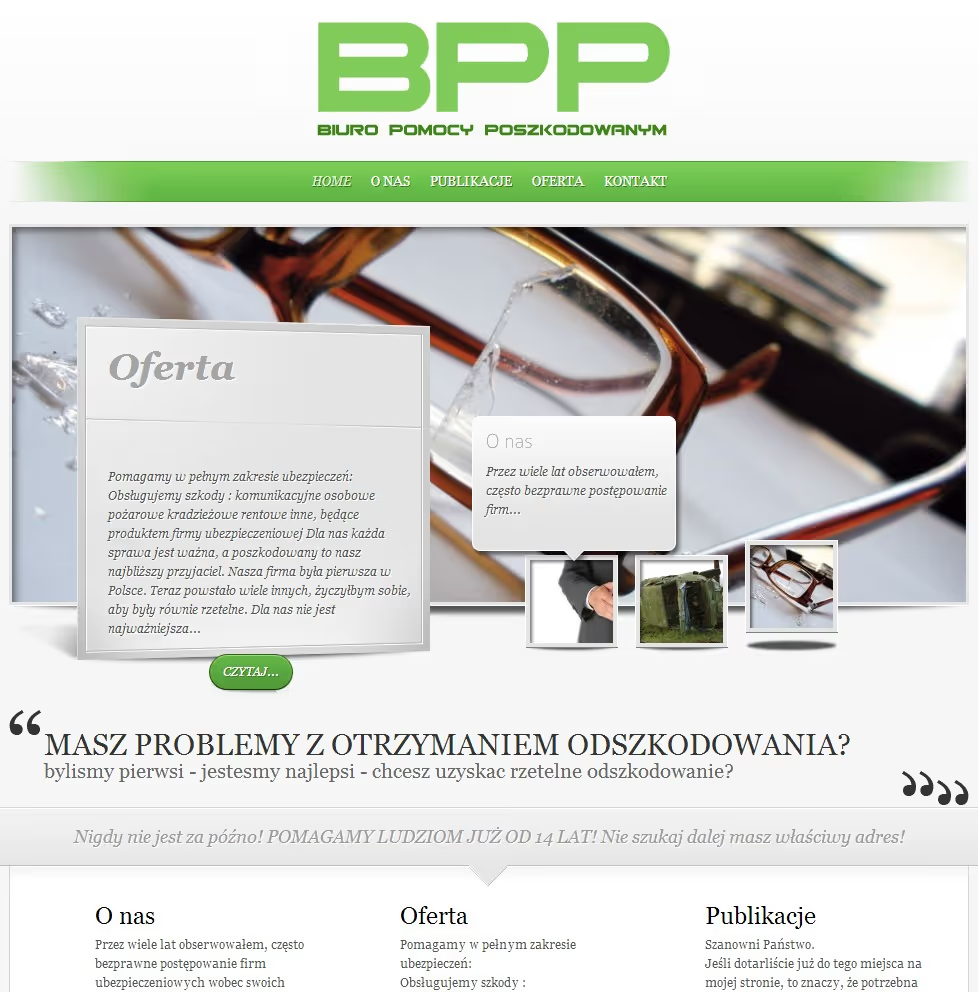
The Victim Assistance Office website was designed to provide professional and empathetic information to support people in difficult life situations. The site serves not only as an information portal but also as a point of contact for people seeking help, legal advice, and psychological support.
Key functionalities and technologies used
After a detailed analysis of the client’s requirements, we implemented a range of modern solutions that increase the website’s usability and positively impact search engine rankings:
- Responsive Design: The use of Fluid Grid, flexible images, and Media Queries in CSS3 ensures an optimal appearance on mobile devices, tablets, and desktop computers.
- Intuitive Content Management System: Based on WordPress, it allows for easy editing and updating of information and help articles, as well as the dynamic publication of the latest content.
- Advanced SEO Optimization: The implementation of semantic HTML5 tags, optimized meta tags, structured data (schema.org), and user-friendly URLs supports better indexing of the website by search engines.
- Contact Form System: The use of custom forms with client- and server-side validation allows for the quick sending of help requests and appointment scheduling.
- Social Media Integration: Automatic linking of content and publication of news on social media profiles allow reaching a wider audience.
- Seamless Content Migration: Import mechanisms allowed for the transfer of historical materials from archived versions of the site (e.g., Web Archive).
Programming challenges and solutions
The website project involved several significant challenges that required modern technological solutions:
- Adaptation to High Accessibility Standards: The implementation of WCAG 2.1 solutions, such as correct semantics, appropriate color contrasts, and optimized navigation, allows easy access to content for people with disabilities.
- Dynamic Content Loading: The use of AJAX and REST API enabled smooth data retrieval and updates, significantly improving the user experience without having to reload the entire page.
- Performance Optimization: Multi-layer caching with Redis and Memcached, image and code compression, and the use of a Content Delivery Network (CDN) shortened loading times and improved the website’s stability.
- Data Security and Business Continuity: Regular backups and monitoring of system logs allow for a quick response to potential issues – a crucial factor for an information portal in crisis situations.
Tools and Technologies
The implementation of the website was based on the latest technologies and tools that ensure its flexibility and high performance:
- WordPress: A stable content management system that allows for easy content management, extensibility through custom plugins and themes, and integration with external systems.
- PHP 7.x/8.x and MySQL: High-performance backend technologies that ensure dynamic content creation and scalability.
- HTML5, CSS3, and JavaScript: Modern coding standards, including the use of SASS preprocessor and JavaScript libraries like jQuery, providing interactive user interfaces.
- Bootstrap: A framework that facilitates the creation of responsive user interfaces and allows for the quick implementation of a consistent design.
- AJAX and REST API: Technologies that enable asynchronous data retrieval, ensuring a smooth user experience.
- Redis and Memcached: Caching systems that speed up access to dynamic content and reduce server load.
- Git: A version control system that provides strict control over changes and facilitates cross-team collaboration.