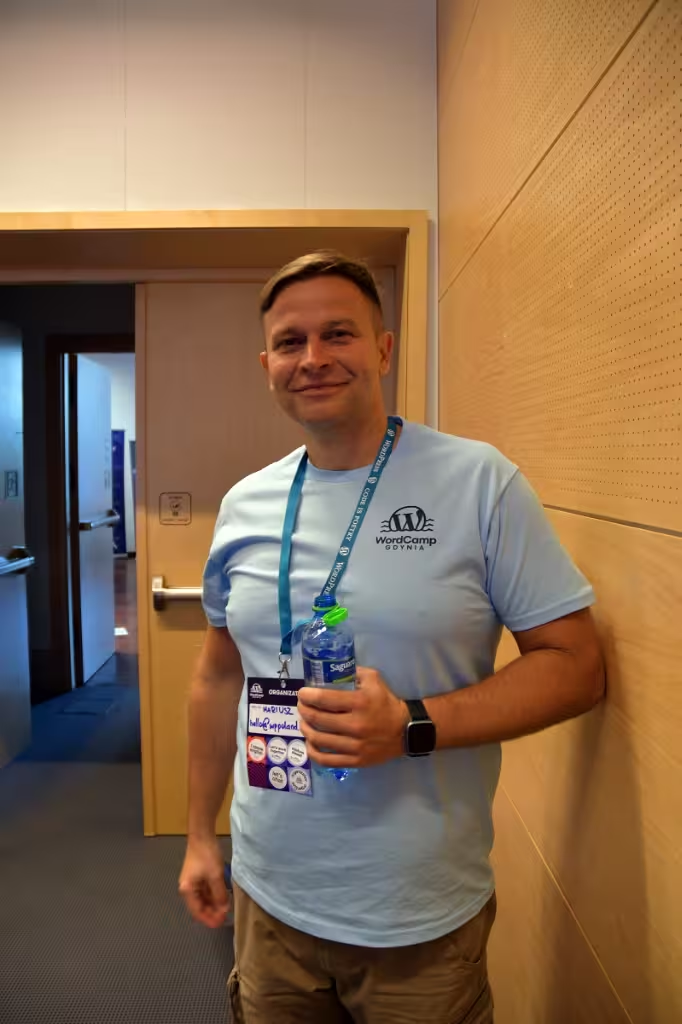
Who: Mariusz Szatkowski, senior WordPress developer delivering B2B WordPress and WooCommerce engineering from Gdynia, Poland.
What: A procurement-oriented guide to how WordPress budgets are formed - not a SKU price list for custom work. Builds, integrations, performance work, migrations, and maintenance are scoped and quoted individually at wppoland.com.
Where: Remote delivery worldwide with EU-facing contracts and clear written scope documents.
How budgeting works:
- Marketing or brochure WordPress sites: individual quote after scoped discovery (typical range 890-2 900 €)
- WooCommerce storefronts and complex catalogue logic: individual quote after scoped discovery (typical range 1 800-6 900 €)
- Integrations-heavy or regulated programmes (ERP, SSO, multilingual checkout, sovereign hosting constraints): individual quote after scoped discovery (from 3 600 €)
- Managed maintenance and incident response retainers: individual quote mapped to SLA, monitoring depth, and change volume (from 69 €/month)
- Senior engineering rates: individual, stated in proposals alongside acceptance criteria (typical context 30-80 €/h)
How much does a WordPress website cost in 2026? A custom B2B WordPress company website costs between 890 € and 2 900 € for standard builds, while a custom WooCommerce store ranges from 1 800 € to 6 900 €. Complex enterprise builds with ERP/CRM integrations start from 3 600 € to 12 000+ €. Ongoing technical maintenance retainers range from 69 € to 590 €/month.
If you want the blunt version: reputable WordPress and WooCommerce work is bought with a written scope, milestones, acceptance criteria, and a contract-priced statement of work. A public price grid cannot reflect integration risk, QA depth, or your operational guarantees, which is why WPPoland publishes individual quotes rather than pretending every project sits in three neat boxes.
How WordPress projects actually get priced
WordPress core is free. Operating a credible property is not. You still budget registrars, hosting tiers, licences where applicable, egress and observability as traffic grows, TLS (often bundled), and senior time for configuration, integration, hardening, performance work against Core Web Vitals, accessibility where you commit to WCAG-aligned acceptance checks, transactional reliability for commerce, disciplined updates, backups with tested restores, and incident response when reality diverges from the roadmap deck.
Three contract shapes recur:
- Fixed bid against frozen scope. A discovery phase produces an explicit scope sheet. The studio quotes once. Predictable until the backlog moves. Healthy programmes pair fixed bids with written change control so scope drift does not collapse trust between marketing, storefront, fulfilment, and finance stakeholders.
- Retainer with a weekly or monthly hour cap. You pre-pay senior time. The cap stops runaway invoices. Unused hours sometimes roll modestly into the next period. Common for WooCommerce roadmaps where backlog volatility is normal rather than exceptional.
- Time and materials with decision gates. T&M earns its bad reputation when there is open-ended backlog with no demos and no approvals. Structural fix: capped hours, fortnightly demos, explicit go/no-go at each milestone, written acceptance with measurable checks (performance budgets, WCAG checkpoints, transactional smoke tests covering payment intents, webhook retries).
Senior contractor rates vary widely by geography, speciality, regulated industry familiarity, multilingual delivery, timezone overlap expectations, security culture, commerce complexity, operational maturity expectations, onboarding burden, stakeholder count, tooling mandate (for example SSO and IdP quirks), maturity of design systems, readiness of structured content inventories, realism of timelines, realism of stakeholder availability for acceptance testing. Treat unattributed forum rate charts as anecdotes, prefer references paired with scopes and escalation paths observable during procurement.
Regardless of contractor, recurring cost anchors exist:
- Domain registration billed annually depending on registrar and TLD policies.
- Hosting tiering climbs with traffic integrations, redundancy, sovereign region requirements, egress, CDN features, caching strategy, staging parity, snapshots frequency, intrusion detection expectations, uptime SLAs contractual or moral.
- Themes span lightweight bespoke block themes, narrowly scoped commercial kits, subscription suites, or bloated multipurpose stacks that postpone cost until performance remediation invoices arrive mid-quarter.
- Plugins can be perpetual, subscription, seat-based, or usage-metered SaaS gateways masquerading as plugins.
- Security tooling stacks WAF optionally, bot mitigation optionally, centralized logging optionally, MFA enforcement on admins non-negotiable in sane programmes.
- Professional services billed by negotiated rate or milestone fees after scope.
[!NOTE] This guide focuses on WordPress.org, self-hosted open-source CMS workflows. WordPress.com is a SaaS continuum with clearer monthly packaging and less maximal flexibility.
Indicative budget ranges for orientation
The figures below are market-context ranges, not a fixed SKU menu. They help you sanity-check a procurement budget before discovery. The binding number always arrives as an individual quote after written scope analysis.
| Engagement | Indicative range (EUR) | Maintenance (retainer per month) |
|---|---|---|
| Business or company website | 890-2 900 € | 69-200 €/month |
| WooCommerce store | 1 800-6 900 € | 130-590 €/month |
| Larger business with integrations | from 3 600 € | individual, scope-led |
| Enterprise and governance | from 12 000 € | individual, SLA-led |
| Senior engineering rate (market context) | 30-80 €/hour | individual per proposal |
These are indicative ranges for budgeting only. The binding quote is individual after scope analysis; WPPoland does not sell a fixed price list.
WordPress budgets for brochure sites and WooCommerce estates
Organizations ask for a neat table. Procurement reality prefers dimensions. Below is deliberately qualitative so you compare vendors with questions, not with fake precision.
| Type | Typical budgeting notes (initial) | Typical budgeting notes (ongoing) |
|---|---|---|
| Small business marketing site | Driven mostly by bespoke design fidelity, multilingual needs, integrations, migrations, redirects, editorial workflows, editorial training, authored block libraries, QA depth. | Usually lower than ecommerce if change volume modest; climbs with frequent campaigns, multisite clones, stakeholder turnover, evergreen experiments. |
| WooCommerce or hybrid commerce | Catalogue ingest, integrations, transactional email deliverability obsession, taxation display complexity, multilingual checkout, refunds edge cases dominate. | Plugin churn, PSP webhooks resilience, reconciliation tooling, fulfilment integrations, ERP sync failure handling, spikes around peak retail windows. |
| Portfolio or membership layers | Payments for subscriptions renewals trials dunning SSO for members content gating metering downloads sometimes legally sensitive. | Fraud vigilance churn analytics compliance with card network rules audits of stored tokens. |
| Large multi-stakeholder programmes | Separate environments promotion governance documentation acceptance matrices sometimes formal UAT calendars security questionnaires pen test remediation cycles. | Named incident SLAs paging rotations documentation for auditors seasonal capacity reviews tabletop exercises patching windows coordination with infra vendors. |
Design and engineering procurement patterns
Costs split by who holds risk:
- In-house teams trading salary and tooling for slower external procurement but recurring operational burden retaining senior WordPress cognition is non-trivial culturally.
- Freelance seniors narrowing agency overhead assumptions but requiring disciplined tickets and access hygiene.
- Studios or agencies bundling designers PMs juniors redundantly sometimes valuable sometimes hide senior dilution scrutinize attribution of who commits production merges.
Maintenance is not interchangeable: compare scopes before comparing monthly euros or dollars nominally labeled the same tier.
WordPress marketing site
- Information architecture grounded in actual content inventories
- Performance and accessibility treated as acceptance criteria where agreed
- Staging parity, reproducible deployments, rollback discipline
- Editorial training and pragmatic governance so you survive first month post-launch
WooCommerce build or rescue
- Payments, taxation display, refunds, PSP edge cases scripted in tests where sensible
- Fulfilment, ERP touches, feeds, multilingual checkout flows modeled explicitly
- Performance path that survives realistic catalogue cardinality not demo ten rows
- Observability and incident expectations captured contractually where needed
Recurring infra line items buyers forget to model
Infrastructure vendors bill separately from engineering statements of work except when bundled intentionally. Typical rows:
| Line item | How it is usually bought | Cadence and notes |
|---|---|---|
| Domain | Registrar SKU | Annual renewal, premium DNS optional, redemption fees painful if expiry slips. |
| Hosting | Monthly or prepaid annual tiers | Climbs with CPU baseline, staging parity snapshots PHP workers concurrency object cache presence edge routing. |
| CDN and edge | Vendor plan or PAYG egress | Image optimization quotas bot fight modes WAF features sometimes gated. |
| Themes and plugins | Per-site licences versus agency bulk | Track renewal dates cancellations compliance with licence counts environments. |
| Monitoring and backups | SaaS bundling or infra native | Schedule test restores so backups are evidenced, not assumed. |
| Email deliverability infra | Transactional ESP | Reputation discipline influences commerce reliability more than flashy templates. |
What moves a quote up or down
Two superficially identical briefs diverge sharply when backlog depth differs.
Catalogue cardinality on WooCommerce. Ten SKU pilot imports differ materially from nightly stock synchronization against ERP or WMS backends with partial failure surfaces, multilingual attribute facets, bundles, preorder logic, feeds to marketplaces or ads platforms, caching discipline when faceted queries stress MySQL politely.
Integration depth. A single cleanly scoped payment rail versus multiple rails refunds chargebacks reconciliation exports tax document pipelines accounting hooks internal audit numbering culture.
Language count. Two languages logistical translation churn versus five controlled hreflang regimes RTL surfaces translated transactional emails lawful consent artefacts per jurisdiction.
Compliance hosting. Data residency logging retention DPIA artefacts subprocessors SSO expectations pen test remediation timelines.
Schedule compression. Parallel staffing design ahead of engineering QA simultaneous with migrations training simultaneous with stabilization week cutovers avoided temptingly naive Friday deploy optimism.
Less common engagements you should budget categories for separately
- Incident response retainers. Premium time boxes caps weekly explicit handoff into steady maintenance afterward.
- Technical due diligence before acquisition. Structured report inventories risk not feature coding.
- Expert support in disputes. Separate engagement letters never mixed casually with shipping features concurrently for same entity if independence matters legally.
Cheap lump sums conceal expensive failure modes
- Performance debt. Heavy multipurpose stacks can ship fast on day one yet fail field Core Web Vitals once real traffic and real media hit production paths.
- Security shortcuts. Predictable administrator entry points plus weak MFA and overprivileged accounts convert minor incidents into public downtime stories.
- Licence integrity. Unauthorised premium components create compliance and malware risk simultaneously.
- Privacy mismatches. Consent artefacts, DPIA expectations, subprocessors documented in vendor contracts deserve budget lines like any infra dependency.
Ultra-low lump-sum promises often underestimate QA depth, staging parity, rollback drills, observability gaps, onboarding effort, stakeholder training, multilingual operational load, transactional edge cases surfaced only after PSP webhooks behave badly under refunds.
How a serious engagement is structured
Discovery produces written scope boundaries. Milestones map invoices to demos with acceptance gates. Governance routes changes through deliberate change orders instead of tacit entitlement. Staging realistically mirrors traffic paths and integrations so rehearsals catch breakage before checkout does.
Maintenance scopes differ materially across:
- Patching rhythm paired with evidenced smoke checks and restores before adventurous plugin batches.
- Monitoring and escalation with named windows for acknowledgement versus resolution and clarity on paging hours.
- Prepaid enhancement hours with weekly caps and groomed backlog so change work stays predictable instead of improvised week to week.
- Security posture reviews spanning users, roles, headers, licences, abandonment of risky plugins calmly retired.
Ask two pragmatic questions before signing care agreements: contractual first-response expectations during real incidents and whether onboarding fees or minimal terms reflect genuine setup auditing time rather than gimmicks.
What drives the cost of a WordPress project
If you strip away the marketing language, five levers explain almost every gap between two quotes for the same brief. Understanding them lets you read a proposal critically instead of anchoring on the bottom line.
- Scope and page count. A five-page brochure site and a forty-template content estate with authored block patterns, campaign landing systems, and editorial roles are different animals. The number of distinct layouts, not the number of pages, tends to predict engineering hours, because ten pages that share one template cost far less than ten pages that each need bespoke design.
- Custom versus off-the-shelf. A commercial theme with a page builder gets you to a launch faster and cheaper on paper, but it carries recurring licence fees, upgrade fragility, and a performance ceiling. A bespoke block theme costs more up front and buys you a lighter, faster, easier-to-maintain foundation. Neither is universally correct; the honest question is which trade-off matches your maintenance appetite.
- Integration depth. Every external system you connect adds design, build, and failure-handling work. One clean payment rail is straightforward. Payment plus ERP stock sync plus CRM plus a shipping provider plus a newsletter tool means each connection needs error paths, retries, and reconciliation, and that is where hours accumulate quietly.
- Compliance and regulation. Consent handling that actually blocks scripts until opt-in, a signed data-processing agreement with your host, documented subprocessors, accessibility acceptance checks, and data-residency constraints are real deliverables. They are cheap to plan in and expensive to retrofit after a complaint or an audit.
- Ongoing maintenance. The build is the smaller half of total cost over a few years. Updates with tested restores, monitoring, security review, and a groomed backlog of small improvements are what keep a site alive and fast. A quote that ignores this is not cheaper, it just defers the invoice.
What a solid quote must include
A number with tax on it is not a quote you can compare or later enforce. A proposal you can hold a vendor to spells out the following:
- Written scope. What is included and, just as important, what is explicitly excluded. Without that boundary, every later question turns into a change order.
- Named deliverables. Not “a website” but the specific page templates, block patterns, integrations, migration volume, and language versions being built.
- Acceptance criteria. Measurable conditions for when a deliverable counts as done, such as a performance budget, WCAG checkpoints, or a smoke test covering the purchase paths.
- Milestones and a payment plan. Invoices tied to demos, not to the calendar alone, so payment tracks visible progress.
- Assumptions and exclusions. What the vendor expects you to supply (copy, images, access, a decision-maker for sign-off) and what the quote does not cover.
- Handover and warranty. Who fixes defects after go-live, within what window, and how the project moves into ongoing care.
- Licence and infrastructure list. Which paid plugins, themes, and services recur, and who pays for them.
When these are missing, you are buying a risk that only becomes visible after the contract is signed.
How to compare several quotes fairly
The most common mistake is judging on the final figure alone. Two quotes carrying the same number can describe completely different work. A fairer comparison uses a few deliberate checks:
- Compare scope, not price. Mentally level both proposals to the same deliverables before you put the numbers side by side. The cheaper one is often cheaper because it quietly does less.
- Normalise maintenance. A low retainer and a high retainer are only comparable once you know whether each includes tested backups, a defined incident response window, and a quota of development hours.
- Ask who does the work. With agencies, what matters is who owns the production merges, not who attends the kickoff call.
- Ask for references with an escalation path. A happy client is useful; a client who survived a real production incident with this vendor tells you far more.
- Calculate total cost of ownership. Hosting, licences, CDN, and email deliverability run independently of the developer and belong in the comparison, otherwise the cheapest proposal only looks cheap on paper.
What to prepare before requesting a quote
The sharper your request, the more reliable the quote, and the smaller the buffer a vendor has to add for uncertainty. Before you reach out, try to have the following ready:
- Content inventory. How many pages and which templates, what will be migrated and what will be written fresh.
- Integration list. Payment providers, ERP or inventory systems, CRM, newsletter, shipping, and anything else that exchanges data with the site.
- Operational numbers. Rough catalogue size, expected traffic, and seasonal peaks, so hosting and performance are sized realistically rather than guessed.
- Must-have versus nice-to-have. An honest split between what has to work at launch and what can wait for a later phase.
- A real deadline. A genuine start date with the reason behind it (a trade show, a campaign, an expiring contract on the old system) rather than “as soon as possible”.
- A budget envelope. An order of magnitude, not an exact figure. It helps the vendor propose a fitting solution instead of an oversized one.
- Access and stakeholders. Who decides on your side, who runs acceptance, and who can grant access to existing systems.
With these in hand, a rough indicative range becomes a firm individual quote you can compare without unpleasant surprises later.